

Artificial intelligence is no longer something happening in distant research labs. It is already shaping how medical decisions are made. Over the next decade, it will quietly but profoundly change how you access expert skin care — whether you live in a major city or far from a specialist.
This shift is not about replacing dermatologists. It is about making specialist insight available sooner, more consistently, and to more people than traditional systems have ever allowed.
“The future of dermatology is not artificial intelligence alone. It is intelligent technology guided by human expertise.”
Getting the Right Dermatology Diagnosis, Faster
Dermatology is visual. Diagnosis is driven by pattern recognition. That makes it uniquely suited to AI-assisted evaluation.
Modern AI systems trained on vast datasets of clinical and dermoscopic images can:
- Distinguish inflammatory, infectious, and neoplastic conditions
- Identify patterns suggestive of skin cancer
- Assign urgency levels
- Generate structured differential diagnoses
For common conditions such as acne, eczema, psoriasis, rosacea, and fungal infections, AI-supported triage can safely organize and prioritize care.
What this means for you is simple:
If your condition is urgent, it is flagged immediately.
If it is routine, it is handled efficiently.
Access improves. Delays decrease.
Teledermatology: Global Specialist Access Without the Wait
Around the world, dermatology wait times remain long. Weeks or months may pass before a consultation — during which symptoms worsen or anxiety grows.
AI-supported teledermatology changes the workflow.
Before a dermatologist reviews your case, AI can:
- Take a structured medical history
- Analyze uploaded skin images
- Highlight concerning features
- Organize likely diagnostic pathways
By the time a specialist evaluates your case, the groundwork is complete.
The consultation focuses on interpretation, judgment, and a clear management plan — not data collection.
Teledermatology, supported by responsible AI, is becoming the first layer of dermatology access globally.
AI in Dermatopathology: The Digital Microscope Era
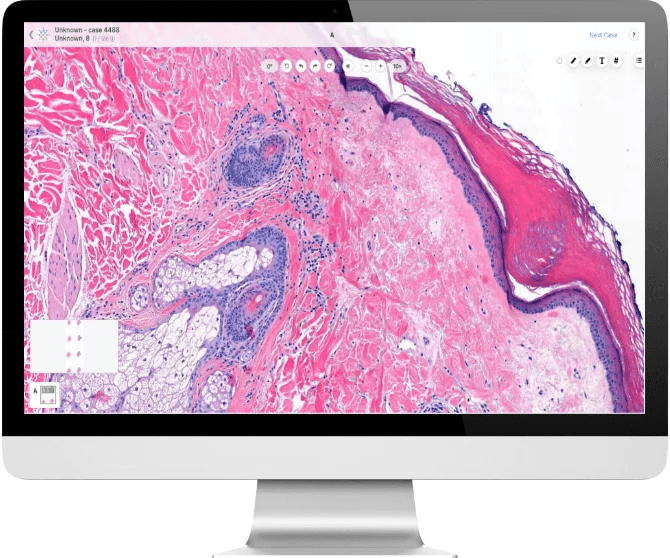
The transformation extends beyond clinical consultations.
AI models trained on digitized dermatopathology slides can already recognize common inflammatory patterns and non-melanoma skin cancers with steadily improving accuracy.
These systems can:
- Pre-screen slides
- Highlight suspicious regions
- Quantify inflammatory density
- Support margin evaluation
They do not replace dermatopathologists.
They enhance precision and reduce oversight error.
The role of the dermatopathologist evolves toward higher-level integration — combining microscopic findings with clinical context and atypical nuances that no algorithm can fully replicate.
AI supports analysis. Expertise delivers interpretation.
From Reactive to Predictive Care: Continuous Monitoring
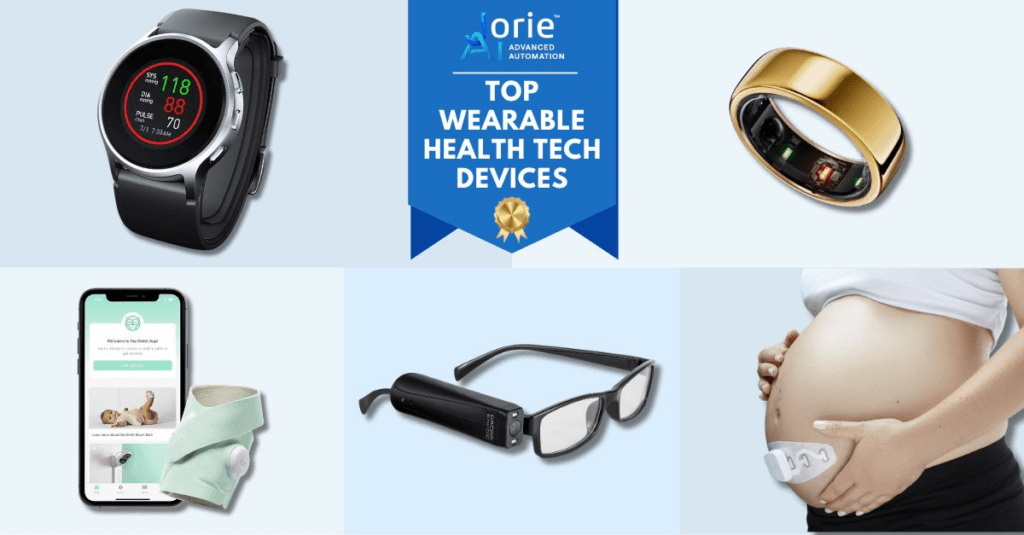
Continuous glucose monitoring has already replaced episodic testing for many patients with diabetes.
Research is advancing toward broader continuous monitoring — electrolytes, inflammatory markers, oxygenation, and other physiologic parameters.
As wearable and implantable monitoring technologies mature, medicine shifts from snapshot-based testing to trend-based analysis.
For chronic inflammatory skin diseases such as psoriasis and eczema, this opens the possibility of identifying systemic changes before visible flares occur.
The shift is subtle but profound:
Care becomes predictive rather than reactive.
Why Human Oversight Is Non-Negotiable
AI in healthcare carries real risks:
- Biased training data
- Overdiagnosis
- False reassurance
- Algorithmic rigidity
The solution is not to resist AI.
It is to ensure that clinicians lead its development and remain responsible for final decisions.
When technology scales without medical oversight, errors scale with it.
When specialists supervise it, quality improves.
What We Are Building at Online Skin Specialist
At Online Skin Specialist, we are integrating AI into dermatology responsibly.
We are introducing a free AI-based educational tool that allows you to:
- Enter your symptoms
- Upload skin images
- Receive structured educational guidance
- Understand possible differential diagnoses
This tool improves awareness. It does not replace medical care.
For patients seeking a dermatologist-supervised consultation, AI assists by:
- Collecting structured history
- Analyzing clinical images
- Identifying potential warning signs
- Organizing diagnostic probabilities
The final clinical interpretation and management plan is delivered by me — Dr. Sasi Kedanathuli, UK-trained dermatologist and dermatopathologist.
Technology organizes. A trained specialist decides.
That distinction defines responsible AI-assisted dermatology.
The Next 10 Years
Within a decade:
- AI-assisted dermatology triage will be routine.
- Teledermatology will serve as first-line access for millions worldwide.
- Dermatopathology will increasingly integrate AI-supported analysis.
- Continuous biometric monitoring will expand beyond glucose.
Doctors will not disappear.
But access will improve.
Speed will increase.
And care will become more consistent.
The future of dermatology is not artificial intelligence alone.
It is intelligent technology guided by human expertise.
And responsibly built teledermatology will be central to that future.
Frequently Asked Questions
Will AI replace dermatologists?
No. AI assists with triage and pattern recognition, but final diagnosis and treatment decisions require specialist oversight.
Is AI dermatology diagnosis accurate?
AI models can accurately classify many common skin conditions and assist in identifying high-risk lesions, but expert review remains essential.
What is AI in dermatopathology?
AI systems analyze digitized biopsy slides to highlight patterns and suspicious areas, helping dermatopathologists reduce the risk of missed findings.
Is teledermatology safe?
When supervised by qualified dermatologists and supported by structured digital tools, teledermatology is safe and increasingly effective.
Can AI detect skin cancer?
AI can assist in identifying patterns suggestive of skin cancer, but confirmation and management require specialist evaluation.
This improves structured data visibility and helps AI answer engines surface your article.